
Nikita Rajvi

Is a $3 Trillion Crypto Collapse Really Coming?

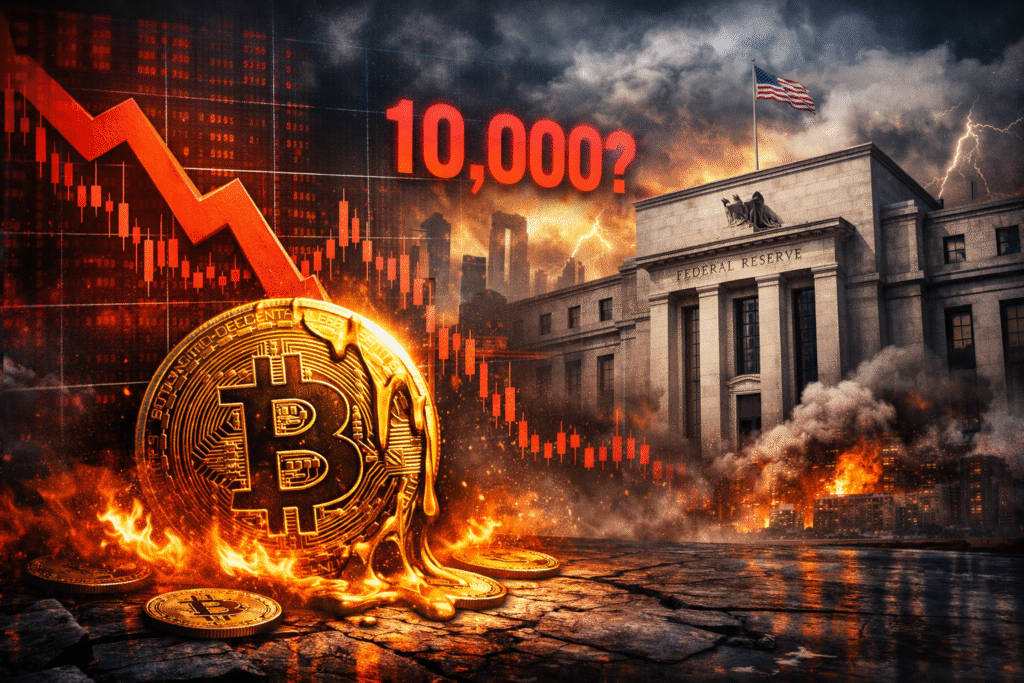
In December 2025, a stark warning jolted the crypto market: analysts suggest the $3 trillion digital asset ecosystem could face a major contraction in 2026 — with Bitcoin potentially falling toward $10,000 in a severe downside scenario. Dramatic? Yes. Dismissible? Not anymore. Crypto has already started to weaken. After peaking earlier this year, Bitcoin and major tokens have pulled back, mirroring stress across global risk assets. But unlike traditional markets, crypto remains heavily driven by liquidity and sentiment — making it more exposed when conditions tighten. The concern isn’t just internal to crypto. Higher real interest rates, a stronger dollar, and shrinking liquidity are pressuring speculative assets globally. Historically, capital exits high-volatility markets first — and crypto sits at the top of that list. The $10,000 Bitcoin projection isn’t a prediction of failure, but a reminder of how violently sentiment-driven markets can reprice. From past boom-bust cycles to the FTX collapse, crypto has shown how quickly confidence can unwind. This isn’t a death sentence — it’s a stress test. As crypto becomes more entangled with global finance, risk management, liquidity discipline, and macro awareness will matter more than narratives. The next cycle may reward caution as much as conviction.  

Is a $3 Trillion Crypto Collapse Really Coming? Read More »

CRYPTO

Baba Kismatwale – Criminal Data Dealing Specialist

Another news, another digital scam, but this time it’s not just a headline, rather a wake-up call for policymakers, law enforcement agencies, the job market and the ordinary citizens. The recent bust of Jamtara based cyber-fraud syndicate pretending to be Delhi Jal Board (DJB) officials involve three youngsters, of which, the main culprit, Niwash Kumar Mandal is a 28-year old B-Tech graduate with a diploma in ethical hacking – the kind of training designed for cybersecurity jobs but often repurposed by those the system leaves behind. Mandal allegedly used his skill set to build a criminal data marketplace by operating a Telegram channel called “Baba Kismatwale.” Through this channel, he sold banking and personal data to cybercriminals operating in West Bengal, Uttar Pradesh, Rajasthan, and elsewhere. The operation came to light when a Delhi citizen reported losing ₹2 lakh after downloading a malicious “DJB app.” Victims received WhatsApp messages threatening water supply disconnection, tricking them into installing a file called “दिल्ली जल बोर्ड V4.apk.” Once installed, the malware quietly captured their banking credentials — and the money began flowing out. When Mumbai-based fraud analysts followed the money trail, the investigation traced the digital operation back to Jamtara, Jharkhand — a place already notorious for cyber scams. What makes this case different, though, is the level of sophistication — malware-laden apps, money laundering through fuel cards, and a Telegram-based marketplace. Young, tech-skilled individuals exist in every corner of the country, but so do gaps in cybersecurity jobs, weak inter-state coordination and low public digital awareness.  As long as this imbalance continues, cybercrime hubs will keep thriving. In India’s rapidly changing digital landscape, this case reminds us of the modern day truth – The most dangerous tap isn’t the one in your kitchen. It’s the one you click. Stay alert, stay safe!

Baba Kismatwale – Criminal Data Dealing Specialist Read More »

Criminal Data, Cyber security, Data theft, Technology